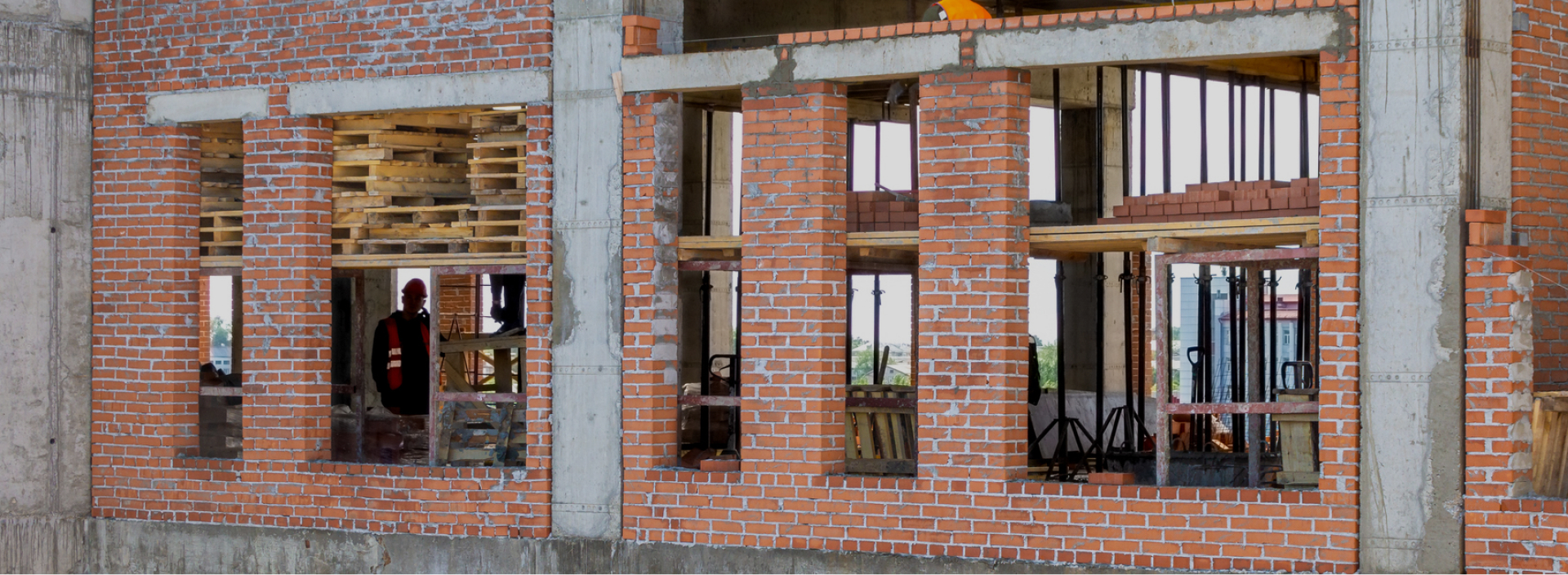
Every Window and Door Opening Needs a Lintel
When a wall has an opening cut into it — for a window, a door, an archway or a garage entry — the masonry or framing above that opening has no support beneath it. Cedar Steel supplies structural steel beams and lintels in Sydney, provides steel installation and erection, and handles commercial steel construction across NSW. A lintel is the structural element that spans the opening and carries the load from above, transferring it to the jambs on either side. Without a correctly sized and installed lintel, the opening is a structural weak point that will crack, settle or fail over time.
In residential construction across Sydney and NSW, steel lintels are the most common choice for masonry walls — brick veneer, double brick and block construction. They are strong, durable, dimensionally predictable and available in the sizes needed for standard residential openings. Understanding how they are sized and specified helps homeowners, builders and certifiers have the right conversations before construction starts.
What Types of Steel Section Are Used as Lintels?
Three types of steel section are commonly used as lintels in NSW residential construction, depending on the span, the load and the wall construction type.
Steel angles are the most common lintel section for single-leaf masonry walls such as brick veneer. A single or double angle lintel sits in the mortar course above the opening, with one leg bearing on the masonry at each end. For standard window widths up to around 1500 mm, a single equal angle is often adequate; wider openings or heavier loads may require a double angle or a heavier section.
Parallel flange channels (PFCs) are used where greater depth and stiffness are required — for wider openings, higher wall heights above the opening, or brick veneer construction where the load from a floor or roof is carried by the lintel. The channel sits with its web vertical, providing more resistance to deflection than an angle of similar weight.
Universal beams are used for large openings — garage doors, wide bi-fold openings or large commercial-residential openings where the span and load exceed what channels can economically provide. A universal beam provides a much higher section modulus than a channel for the same weight, making it the efficient choice for longer spans under heavier loads.
How Is the Lintel Size Determined?
The correct lintel size for any given opening is determined by a structural engineer based on: the clear span of the opening, the height of the wall above the opening (the load height), the type of construction above (masonry only, or masonry with floor or roof loads), and the material grade of the steel.
For standard residential openings within the span and load ranges covered by the Australian Standard residential timber framing standard (AS 1684) or equivalent masonry construction guides, builders and certifiers often work from span tables that give the minimum lintel size for given conditions. However, for non-standard openings, atypical load conditions or any opening that your engineer or certifier has flagged as requiring specific assessment, a structural engineering calculation is required.
Cedar Steel does not design lintels — that is the engineer’s job — but Cedar Steel supplies the specified section, cut to the required length, with the appropriate surface treatment for the installation environment, delivered to Sydney sites within the programme lead time.
What Surface Treatment Do Residential Steel Lintels Need?
In brick veneer construction, a steel lintel embedded in the mortar course is in a damp environment. Even in a sheltered wall, moisture from the mortar during construction and from the external environment over time will reach the lintel. Ungalvanised steel in this environment will rust, and the expanding rust product can cause brick spalling — the characteristic cracking and displacement of bricks above windows that is a common defect in older Sydney homes.
Hot-dip galvanising is the standard surface treatment for steel lintels in external masonry walls. The zinc coating provides durable corrosion protection in the masonry environment. For internal walls where moisture is not a concern, a primed lintel may be acceptable depending on the certifier’s requirements.
Cedar Steel supplies lintels in the appropriate surface treatment for the installation environment, including hot-dip galvanised angles, channels and beams for external masonry applications across Sydney.
How Long Does It Take to Get a Lintel Supplied?
For standard residential lintel requirements — angles, channels and small universal beams in common sizes — Cedar Steel can typically supply from stock or from short-lead-time procurement, with delivery to site within the builder’s programme. More unusual sizes or sections that need to be cut from long lengths require a short fabrication step and a slightly longer lead time.
The best approach is to send the engineer’s specification or the lintel schedule to Cedar Steel as early as possible. Cedar Steel responds to residential lintel enquiries within one business day and confirms lead times at the time of quoting.
How Many Lintels Does a Typical Sydney Residential Extension Need?
The number of lintels in a residential extension depends on the number and size of openings in the new construction. A standard single-storey extension with two windows, a door and a set of bi-fold doors might need four to six separate lintel elements, each cut to a different length and potentially a different section size. A two-storey addition or a renovation involving the ground floor of a double-brick home may have significantly more, particularly if the construction involves removing or altering existing window positions.
Builders who provide Cedar Steel with a full lintel schedule — the section type, size and quantity for each opening — receive a complete supply quote rather than individual item prices, which simplifies procurement and often improves the overall cost.
Supply Your Residential Lintel Steel Through Cedar Steel
Cedar Steel supplies steel lintels — angles, channels and universal beams — to residential builders, owner-builders and home renovators across Sydney and NSW. Hot-dip galvanised, primed or bare, cut to length, delivered to site.
Contact Cedar Steel today:
Visit: https://cedarsteel.com.au/contact/
Call: 1300 714 334
Send your lintel schedule and we will quote and confirm delivery within one business day. Sydney-wide service from Bankstown.