They Look Similar. They Are Not the Same.
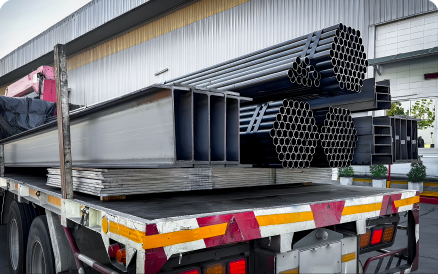
Both universal beams and universal columns are hot-rolled I-shaped steel sections. Cedar Steel supplies the full range — including structural steel beams in Sydney — plus steel installation and erection and commercial steel fabrication across NSW. Both are made from Grade 350 steel. Both are used extensively in building construction across Sydney and NSW. But they are designed for fundamentally different structural purposes, and using one where the other is required is not a minor substitution — it is a structural engineering non-conformance.
Understanding the difference is important for anyone involved in specifying, procuring or overseeing structural steel on a project.
What Is a Universal Beam?
A universal beam, abbreviated UB, is proportioned to resist bending. Its cross-section has a web that is significantly deeper than it is wide — the section is tall and relatively narrow. This tall, slender geometry gives the beam a high moment of inertia about its major axis, meaning it is very efficient at resisting the bending that occurs when a horizontal member carries load across a span.
When you install a universal beam horizontally — spanning between two columns to carry a floor or a roof — the load causes the beam to bend, with the top flange in compression and the bottom flange in tension. The deep web maximises the lever arm between these two flanges, making the section highly efficient at resisting that bending with relatively little material.
Common universal beam applications in Sydney construction: floor beams spanning between columns, roof beams in portal frames, mezzanine beams, lintel beams over wide openings, crane runway beams in industrial facilities.
What Is a Universal Column?
A universal column, abbreviated UC, is proportioned to resist axial compression — the load that acts along the length of a vertical member. Its cross-section has a web and flanges that are much more equal in proportion: the section is nearly as wide as it is deep. This stocky, compact geometry gives the column a high moment of inertia about both its major and minor axes, which is important because a column under compression load can buckle in either direction.
The compact proportions of a UC also mean it is better suited to resisting moment (bending) from eccentric loads — loads that do not act exactly through the centre of the section, creating bending in addition to compression. Columns in a building frame carry vertical load from beams framing into them from multiple directions, and the UC’s balanced section handles this combined loading efficiently.
Common universal column applications in Sydney construction: vertical columns in commercial and residential building frames, columns in portal frame structures, post members in mezzanine floor systems, columns in staircase structures.
Can a Universal Beam Be Used as a Column?
Technically, a universal beam can be oriented vertically and used as a column — it is still steel, it still has a cross-section that can resist compression. But its section properties are not optimised for this purpose. The UB’s deep, narrow cross-section means its minor axis stiffness is significantly lower than its major axis stiffness, making it more susceptible to lateral buckling under compression load.
If a builder substitutes a UC with a similarly sized UB without engineering approval, the column may not have adequate capacity for the load and buckling length in the minor axis direction. This is exactly the type of substitution that creates structural non-conformances on site and requires engineering assessment to resolve.
The reverse substitution — using a UC where a UB is specified for a horizontal member — has a different set of problems. The UC’s compact section is less efficient in bending, meaning it will deflect more under the same load, or a larger, heavier section will be needed to achieve the same stiffness as the specified UB.
How Do You Tell Them Apart on a Drawing?
On an engineering or shop drawing, universal beams are designated with the prefix UB and a two-part designation — for example, 310UB40.4. The first number is the nominal depth in millimetres and the second is the weight per metre in kilograms. Universal columns use the prefix UC and the same naming convention — for example, 200UC59.5.
In practice, the easiest way to distinguish them physically is the flange-to-depth ratio. A universal beam looks tall and narrow; a universal column looks much more square in proportion. Hold a 310UB and a 200UC next to each other and the difference is immediately obvious.
What About Welded Beams and Welded Columns?
Where standard universal beam or column sections are not deep or heavy enough for the loads required, welded beams (WB) and welded columns (WC) are fabricated from three plates to achieve custom section dimensions. Cedar Steel fabricates both in-house at the Bankstown workshop, alongside the full range of universal beam and column work.
Get the Right Steel Specified for Your Sydney Project
Cedar Steel supplies universal beams, universal columns, welded beams and welded columns for projects across the full Sydney metropolitan area and wider NSW. Whether you are a builder, engineer or project manager, Cedar Steel can review your specification and confirm the right sections for your project before steel is ordered.
Contact Cedar Steel today:
Visit: https://cedarsteel.com.au/contact/
Call: 1300 714 334
Quote responses within one business day. Sydney-wide delivery and installation from our Bankstown workshop.