An Old Debate With a More Nuanced Answer Than Most People Expect
Steel versus concrete is not a debate with a universal winner. Cedar Steel fabricates structural steel frames for commercial buildings across Sydney, supplying structural steel beams, providing steel installation and erection in Sydney, and handling all commercial steel construction scopes. Both materials are used extensively in commercial construction across Sydney and NSW, often in the same building, because both have genuine strengths and genuine limitations. The question is never “which is better?” — it is always “which is better for this project, this programme, this site and this budget?”
This guide covers the practical comparison that matters for commercial construction: speed, cost, span capability, fire resistance, flexibility and programme risk. Cedar Steel fabricates structural steel — the comparison below is honest, including where concrete has advantages over steel.
Speed of Construction
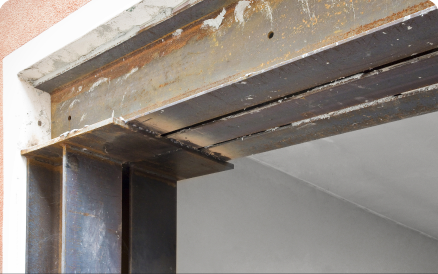
Structural steel frames go up faster than concrete frames of equivalent complexity. Steel is fabricated off-site while site preparation and foundations are underway. The frame arrives installation-ready and is erected by a small crew with a crane, typically in days or weeks rather than months. There is no formwork, no curing time, no stripping cycle. Each level of steel is complete and structural the moment the bolts are tightened.
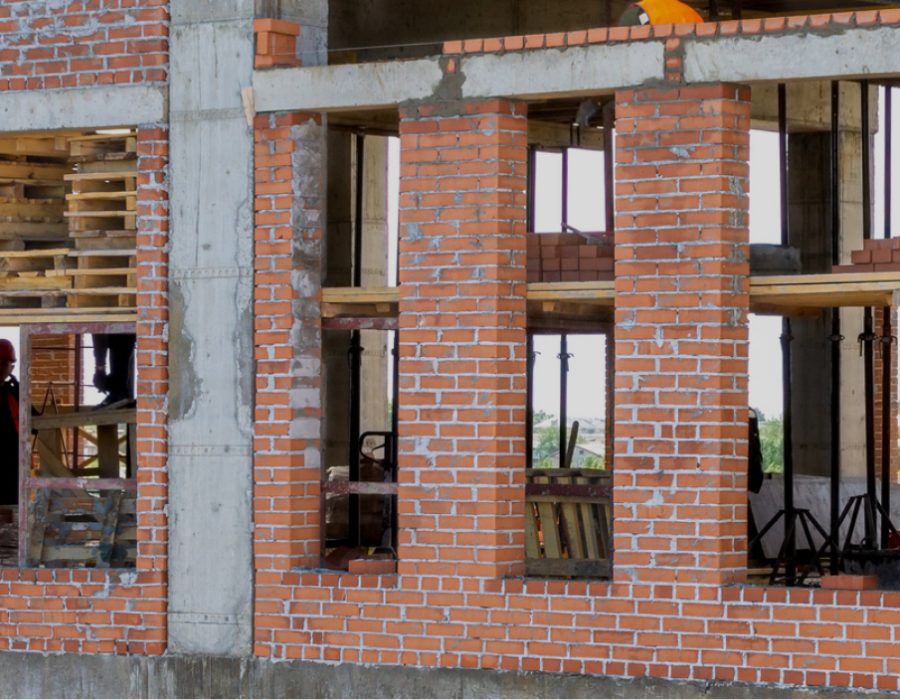
Concrete construction is slower because it is cast in place. Formwork takes time to build, concrete takes time to cure, and the formwork cannot be stripped until the concrete reaches specified strength. For multi-storey buildings, this creates a repetitive floor-by-floor cycle that adds time to the programme relative to a steel frame. On large projects with significant repetition, concrete can be optimised to a fast cycle, but the steel frame advantage in the early programme stages is real.
For Sydney commercial projects with tight delivery commitments — a client who needs to occupy by a specific date, a development with presales conditions, or a tenant with a lease commencement — the programme advantage of steel is often a deciding factor.
Cost
Steel typically has a higher material cost per tonne than concrete, but this comparison is not straightforward. The total structural cost of a building depends on the whole system — the primary material, the connections, the floors, the fire protection, the foundations and the construction programme. Steel frames are lighter than equivalent concrete frames, which can reduce foundation sizes and costs. Steel construction’s speed advantage translates into lower preliminary costs and earlier revenue from the completed building.
For low-rise commercial buildings in Sydney — one to four storeys — steel and concrete are often competitive in total cost. For mid-rise buildings of five storeys and above, reinforced concrete typically becomes more cost-competitive because concrete’s inherent fire resistance removes the cost of fire protection systems that steel requires. For long-span, high-clearance or architecturally complex buildings, steel’s structural efficiency often makes it the lower-cost option.
Span Capability
Steel has a clear advantage in long-span applications. A structural steel frame can economically span 12 to 20 metres or more between columns — enabling wide-open floor plates without internal columns. This is the defining characteristic of steel-framed commercial buildings: column-free floor space that maximises operational flexibility for tenants.
Concrete spans are more limited by the depth of the slab and beam required to span the same distance. Spanning 15 metres in concrete requires either a post-tensioned flat slab with significant depth, a deep beam and column frame, or a waffle slab — all of which add weight and cost relative to a steel alternative. For warehouse, industrial and large retail applications across Sydney where clear spans are essential, steel is typically the more economical choice.
Fire Resistance
This is where concrete has a genuine advantage over steel. Concrete provides inherent fire resistance — the material itself slows the rate at which temperature rises in the concrete and in any reinforcing steel within it. A concrete frame does not need additional fire protection applied to it to achieve the required fire resistance level.
Structural steel loses strength as it heats up, and an unprotected steel frame can fail at temperatures reached in a building fire significantly faster than a concrete frame. Fire protection must therefore be applied to structural steel — through intumescent coatings, board systems or concrete encasement — to achieve the required fire resistance level under the National Construction Code. This fire protection cost is a real addition to the steel frame cost, and on mid-rise buildings it is a significant factor in the material comparison.
Cedar Steel advises on fire protection systems at the design stage and coordinates with the fire engineer to ensure the surface treatment and fire protection specifications are compatible and achievable within the project timeline.
Flexibility and Adaptability
Steel structures are more adaptable than concrete structures over the life of a building. Adding openings in steel frames, extending floors, adding levels, modifying structural layouts — all of these are achievable more readily in a steel frame than in a concrete one. For commercial buildings where the use may change over time — retail to office, warehouse to logistics — steel’s adaptability is a long-term asset.
Which Is Right for Your Sydney Commercial Project?
Cedar Steel works with builders, developers and project managers across Sydney who are evaluating structural material options for commercial projects. If you are considering structural steel for a commercial building and want an experienced view on feasibility, programme, cost and specification, Cedar Steel’s team can provide that input at the early design stage.
Contact Cedar Steel today:
Visit: https://cedarsteel.com.au/contact/
Call: 1300 714 334
Send your project brief or preliminary drawings and we will respond within one business day. Sydney-wide structural steel from Bankstown.