Two Ways to Apply Zinc to Steel
Zinc is the preferred corrosion protection material for structural steel exposed to outdoor, coastal or industrial environments. Cedar Steel coordinates all surface treatment as part of the fabrication scope, also supplying structural steel beams in Sydney, providing steel installation and erection, and handling commercial steel construction across NSW. It protects steel in two ways: as a physical barrier between the steel and its environment, and through cathodic protection where zinc corrodes sacrificially to protect adjacent areas of exposed steel. Both hot-dip galvanising and hot zinc spray (also called thermal spray zinc or metallising) deliver zinc protection, but they do it very differently.
Understanding the difference helps builders, engineers and project managers specify the right treatment for their project environment and constraints — and avoid the cost and compliance issues that come from applying the wrong treatment.
What Is Hot-Dip Galvanising?
Hot-dip galvanising (HDG) is the immersion of fabricated steel in a bath of molten zinc at approximately 450 degrees Celsius. The zinc bonds metallurgically with the steel surface, creating a series of zinc-iron alloy layers with a pure zinc outer layer. The resulting coating is integral to the steel — it cannot be peeled off, it does not delaminate, and it provides consistent coverage over the entire surface of the steel, including into recesses, around edges and through holes.
HDG is the dominant corrosion protection method for structural steel in outdoor, coastal and marine environments across NSW. The coating is produced to a controlled thickness under AS/NZS 4680, the standard for hot-dip galvanised coatings on fabricated ferrous products, and the resulting zinc thickness is measurable and certifiable.
What Is Hot Zinc Spray?
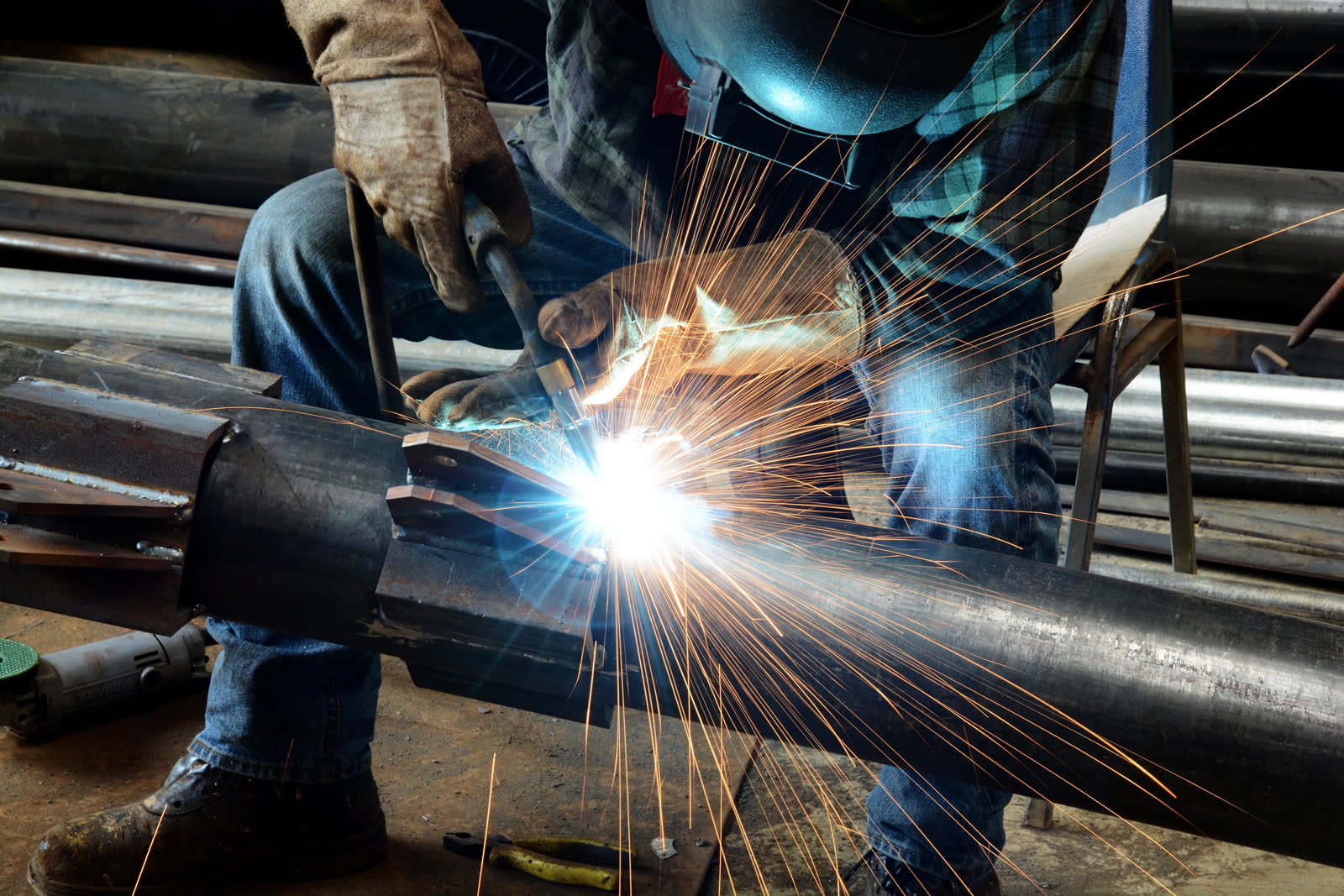
Hot zinc spray (HZS), also known as thermal spray zinc or metallising, is the application of molten zinc to a steel surface using a spray gun. Zinc wire or powder is fed through a torch where it is melted and propelled as fine droplets onto the steel surface using compressed air or combustion gases. The droplets solidify on impact to form a zinc coating.
Unlike hot-dip galvanising, hot zinc spray does not require the steel to be immersed in a bath. It is an in-situ process that can be applied in the workshop, on site after erection, or on existing structures. This is the key operational difference that determines when HZS is the appropriate choice.
What Are the Performance Differences Between the Two Systems?
Hot-dip galvanised coatings and hot zinc spray coatings both provide cathodic protection and both have excellent corrosion resistance when properly applied and inspected. However, there are some performance differences worth understanding.
Hot-dip galvanised coatings have a metallurgically bonded zinc-iron interface that makes the coating highly adherent and resistant to mechanical damage. The surface has the characteristic spangle pattern of crystallised zinc and is smooth relative to thermal spray. The coating thickness under AS/NZS 4680 is typically in the range of 45 to 85 microns for standard structural sections.
Hot zinc spray coatings have a rougher, more porous surface because the zinc droplets do not fully merge. This porosity can be beneficial as a key for subsequent paint topcoats, and it contributes to the coating’s performance as a primer in duplex systems. However, the porosity also means the coating requires sealing if it is to perform without a topcoat in the same exposure class as HDG. Applied thicknesses for HZS on structural steel are typically higher than for HDG — 100 to 150 microns is common — to compensate for the porosity.
When Should You Use Hot Zinc Spray Instead of Hot-Dip Galvanising?
Hot zinc spray is the right choice when the fabricated steel is too large to fit in the available galvanising bath. Galvanising baths have fixed dimensions — typically around 12 to 14 metres in length for standard baths in NSW. A long-span beam or large fabricated section that exceeds the bath dimensions cannot be hot-dip galvanised in a single dip and would need to be double-dipped (an additional cost and process step) or treated with an alternative.
Hot zinc spray is also the right choice when zinc protection needs to be applied after erection — for example, when weld repairs or cut ends on a galvanised structure need to be treated post-installation, or when an existing structure needs zinc protection restored after surface damage. HDG cannot be applied to steel that is already erected.
Hot zinc spray is also used in duplex systems where the zinc is applied as a primer and a paint topcoat is applied over it. The rougher surface profile of HZS provides an excellent mechanical key for the topcoat, making this system widely used for structural steel in bridges, industrial facilities and coastal infrastructure across NSW.
Which Should You Specify for Your Sydney Project?
For standard structural steel fabrications that will fit in the galvanising bath — the majority of residential, commercial and standard industrial work across Sydney — hot-dip galvanising is the preferred choice. The metallurgical bond, the controlled and certifiable coating thickness, and the consistent coverage make it the more reliable and cost-effective system for most applications.
Hot zinc spray is the better choice when: the sections are oversized for the bath, the application is post-erection, the specification requires a duplex (zinc plus paint) system, or the project specification specifically calls for thermal spray zinc to a particular standard such as AS/NZS 4214.
Cedar Steel advises on the appropriate surface treatment at the quoting stage, considering the section sizes, the project environment, the specification requirements and the programme constraints. Both systems are available through Cedar Steel’s surface treatment coordination.
Cedar Steel: Surface Treatment Coordination Across Sydney and NSW
Cedar Steel coordinates all surface treatment as part of the end-to-end fabrication scope. Whether your project calls for hot-dip galvanising, hot zinc spray, powder coating or a combination system, Cedar Steel manages the specification, sequencing and quality control from workshop to delivery.
Contact Cedar Steel today:
Visit: https://cedarsteel.com.au/contact/
Call: 1300 714 334
Send your drawings and environment details and we will confirm the right surface treatment specification in your quote. Response within one business day. Sydney-wide service from Bankstown.