The Supporting Cast of Structural Steel
Universal beams and columns get most of the attention in structural steel discussions — and rightly so, because they carry the primary loads. Cedar Steel supplies the full range of sections including structural steel beams in Sydney, provides steel installation and erection, and handles commercial steel construction across NSW. But the connections, supports and secondary members that hold everything together rely on a different set of steel sections: angles, channels and cleats. These sections are not secondary in importance. Without them, the primary structure cannot be assembled. Understanding what each one does helps builders, engineers and project managers specify and procure structural steel correctly for any application across Sydney and NSW.
What Is a Steel Angle?
A steel angle, also called an angle iron or an L-section, has an L-shaped cross-section with two legs meeting at a 90-degree angle. The legs may be equal (an equal angle, EA) or unequal (an unequal angle, UA), depending on the structural requirement. Angles are produced by hot rolling and are available in a wide range of sizes, typically referenced by their leg dimensions and thickness — for example, 75x75x6 EA (75 mm legs, 6 mm thick).
Steel angles are one of the most versatile structural sections in construction. Their uses include: lintels over window and door openings in masonry walls (a galvanised angle sitting in the mortar course and bearing on the brickwork at each end), shelf plates and bearing supports for precast or masonry elements, framing members for lightweight secondary structures, edge angles on platforms and mezzanine floors, bracing members in light industrial structures, and connection plates where the L-shape geometry provides bearing in two directions simultaneously.
Cedar Steel stocks and cuts steel angles to length for projects across Sydney and NSW, including hot-dip galvanised angles for masonry lintel applications where corrosion protection is required.
What Is a Steel Channel?
A steel channel has a C-shaped cross-section — a vertical web with two flanges projecting horizontally from the same side. Like angles, channels are hot-rolled and available in both standard parallel flange channel (PFC) and tapered flange channel configurations. Parallel flange channels are the most common structural type used in NSW construction, referenced by nominal depth and weight per metre.
Steel channels are used in a wide range of applications. As a primary section, they are effective lintels over wider openings in masonry walls where an angle would be undersized. They are also used as purlins and girts in shed and industrial building construction, as secondary beams supporting composite or steel decking, as chord members in light trusses, and as edge frames and perimeter sections on mezzanine and platform structures.
Because the channel’s flanges project from one face only, it has a geometric advantage for specific connection configurations — the open face of the channel can accept bolts, welded-on plates or bearing surfaces without the web interfering with the connection. This makes channels the natural choice for applications where one side of the section needs to be clear for a bracket, a cladding fixing or a secondary beam connection.
What Are Cleats?
A cleat is a short piece of steel section — usually an angle or a plate — welded to a primary structural member to provide a connection point for a secondary member. The term is used loosely across the industry and can refer to standard angle cleats, fin plate cleats (a flat plate welded to a web face), end plate cleats, and gusset plates.
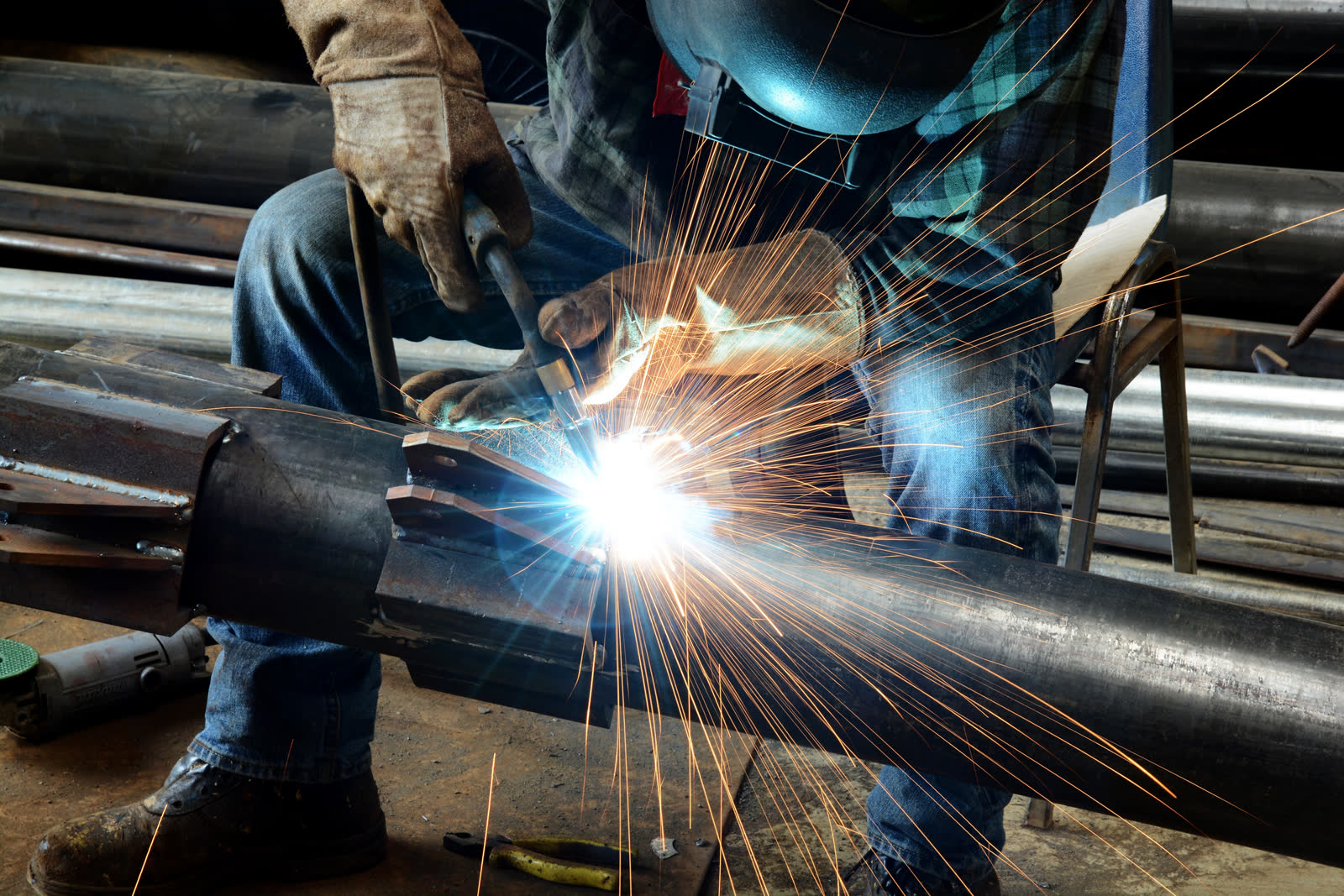
Cleats are the connection hardware of a structural steel frame. They are typically welded to primary beams and columns in the fabrication workshop, in exactly the right position specified on the shop drawing, so that secondary beams, braces and other members can be bolted to them on site. A correctly positioned, correctly welded cleat makes installation faster and more accurate. A cleat that is in the wrong position, welded on the wrong face, or with the wrong bolt hole pattern creates a connection problem on site.
Cedar Steel welds cleats and connection plates as part of the standard fabrication scope on all structural projects. Cleats are positioned from the shop drawing, not from memory or convention, and are checked against the drawing before steel is dispatched.
What Is the Difference Between a Plate and a Cleat?
A cleat is specifically a connection device — a piece of steel that provides a bolted or welded connection point. A plate is a general term for a flat piece of steel that can serve many purposes: as a base plate (connecting a column to a concrete footing), a gusset plate (strengthening a connection), a stiffener plate (preventing local web buckling), a cover plate (strengthening a beam flange), or a fin plate (a welded-on connection plate for a secondary beam). The distinction between the two terms is somewhat informal in industry usage, and both are part of the fabrication scope on most structural projects.
How Does Cedar Steel Supply These Sections?
Cedar Steel supplies steel angles, channels, cleats and plates as part of the fabrication scope on all structural projects — cut to length, pre-drilled or with welded connections as required by the drawings. For straightforward supply-only requirements (a builder who needs angles cut for lintels or channels cut for secondary framing), Cedar Steel provides supply quotes from standard stock with short lead times.
Source Your Steel Sections Through Cedar Steel
Cedar Steel supplies the full range of structural steel sections — angles, channels, cleats, flat bars and plates — for projects across the full Sydney metropolitan area and wider NSW. Fabricated to your specification, cut to length, delivered to site.
Contact Cedar Steel today:
Visit: https://cedarsteel.com.au/contact/
Call: 1300 714 334
Send your schedule or drawings and we will quote and confirm delivery within one business day. Sydney-wide service from Bankstown.