Why Surface Treatment Is Not an Afterthought
Steel corrodes. Left untreated, even Grade 350 structural steel will begin to oxidise within days of fabrication. Cedar Steel coordinates surface treatment as part of every fabrication scope, matching the right finish to your environment and delivery schedule. The surface treatment you specify determines how long the steel remains structurally sound and visually acceptable in its installed environment. Get it right and the steel outlasts the building. Get it wrong and you are looking at remediation costs within years, or a compliance issue if a corrosion protection specification has been breached.
There are three surface treatment options used most commonly on structural steel projects in Sydney and NSW: hot-dip galvanising, powder coating and zinc primer. Each has a specific application range, performance profile and cost profile. This guide explains how they differ and when to use each.
What Is Hot-Dip Galvanising?
Hot-dip galvanising is the process of immersing fabricated steel in a bath of molten zinc at approximately 450 degrees Celsius. The zinc bonds metallurgically with the steel surface, creating a coating that is integral to the steel rather than applied on top of it. The result is a matt silver finish with a characteristic crystalline spangle pattern.
The zinc coating protects steel in two ways. First, it acts as a physical barrier between the steel and the environment. Second, and more importantly, zinc is sacrificial — it corrodes preferentially to the steel beneath it. If the coating is scratched or damaged, the zinc around the scratch continues to protect the exposed steel through cathodic protection. This is why galvanised steel performs so well in aggressive outdoor environments.
Hot-dip galvanising is the right choice for structural steel that will be permanently exposed to the weather, coastal environments, high humidity, soil contact or any other aggressive corrosion category. It is particularly common on civil and infrastructure steel, outdoor platforms, pedestrian bridges, industrial yard structures and coastal residential construction across NSW.
The limitation is geometry. Not all fabricated pieces can be galvanised — very large sections may exceed the bath dimensions available, and hollow sections need to be vented to prevent pressure build-up in the bath. Cedar Steel coordinates galvanising requirements at the drafting stage to ensure pieces are designed to be galvanisable where specified.
What Is Powder Coating?
Powder coating is an electrostatic painting process. Dry powder is applied to the steel surface and then cured in an oven, producing a hard, smooth, durable finish available in a very wide range of colours. It is primarily a decorative finish, though it also provides corrosion protection.
The performance of powder coating depends heavily on the surface preparation beneath it. Steel must be correctly blasted or chemically pre-treated before powder is applied. If the surface is contaminated or the prep is inadequate, the coating will delaminate, and once moisture gets behind it, corrosion accelerates rapidly.
Powder coating is the right choice for structural steel in internal environments — mezzanine floors, office fit-outs, internal staircases and handrails — where colour is important and the steel is not subject to aggressive corrosion conditions. For external applications in Sydney’s coastal suburbs, powder coating alone is not typically sufficient without a primer undercoat or galvanised substrate.
Many commercial projects in Sydney specify a galvanised and powder-coated system for external steel — the galvanising provides corrosion protection, and the powder coat provides the specified colour finish. This combination is more expensive but gives a long service life in coastal conditions.
What Is Zinc Primer?
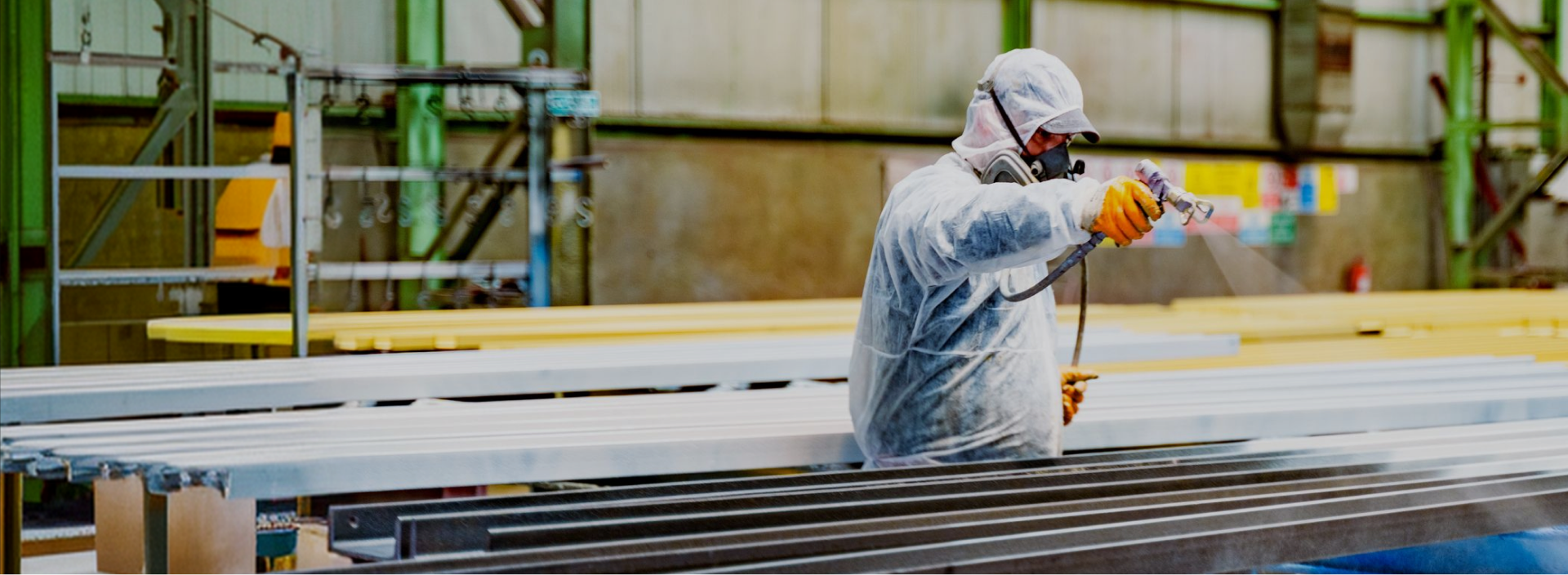
Zinc phosphate primer is a paint-applied primer coat that contains zinc particles suspended in a binder. It is spray-applied to blasted steel in the workshop, providing a base level of corrosion protection that is significantly better than bare steel or standard paint primer.
Zinc primer is the standard workshop finish for structural steel that will be installed in sheltered or internal environments, or where on-site topcoat painting is planned. It is fast to apply, relatively inexpensive and does not require immersion in a galvanising bath, making it suitable for large or complex fabricated sections that cannot be galvanised.
The important limitation of zinc primer is that it is a coating, not a bonded zinc layer. Unlike hot-dip galvanising, zinc primer does not provide cathodic protection to damaged areas. If the primer coat is scratched or cut through during installation — which is common on busy construction sites — the exposed steel needs to be re-primed promptly or it will begin to rust.
For structural steel inside commercial buildings, warehouses, shopping centres and covered industrial facilities across Sydney, zinc primer is a practical and cost-effective surface treatment that provides adequate protection for the intended service life.
How Does Hot Zinc Spray Compare?
Hot zinc spray, also known as metallising or thermal spray zinc, is a process where zinc wire or powder is melted and sprayed onto the steel surface using a thermal spray gun. The result is a zinc coating similar in performance to hot-dip galvanising, but applied in situ rather than by bath immersion.
Hot zinc spray is used when pieces are too large for the galvanising bath, when site application is required after erection, or when specific project specifications mandate it. It is more expensive than hot-dip galvanising but provides comparable corrosion protection and cathodic properties.
Which Corrosion Category Determines the Right Finish?
Australian Standard AS 4312 defines corrosion categories for structural steel based on the environment — from C1 (very low, heated internal spaces) through to C5 (very high, aggressive industrial or marine environments). Your engineer or corrosion specialist assigns a category to your project based on location, environment and intended service life. The surface treatment specification follows from that category.
For a Sydney beachside residential extension, the corrosion category will typically be C4 or C5 due to salt air exposure. That calls for hot-dip galvanising or a galvanised and topcoated system. For an internal commercial mezzanine in Western Sydney, C2 or C3 is more typical, and zinc primer with a topcoat is adequate.
Cedar Steel Can Advise and Coordinate Your Surface Treatment
Cedar Steel handles surface treatment coordination as part of its end-to-end service, advising on the appropriate specification for your project environment and ensuring the treatment is matched to your programme timeline. Whether your project calls for hot-dip galvanising, powder coating, zinc primer, hot zinc spray or a combination system, Cedar Steel manages the process from fabrication through to delivery.
No more chasing a separate subcontractor for galvanising while your programme moves on without you. One team, one point of accountability, across Sydney and NSW.
Contact Cedar Steel today:
Visit: https://cedarsteel.com.au/contact/
Call: 1300 714 334
Send your drawings, specify your environment and we will recommend the right surface treatment system and include it in your fabrication quote. Responses within one business day.