Why the Welding Standard Matters as Much as the Fabrication Standard
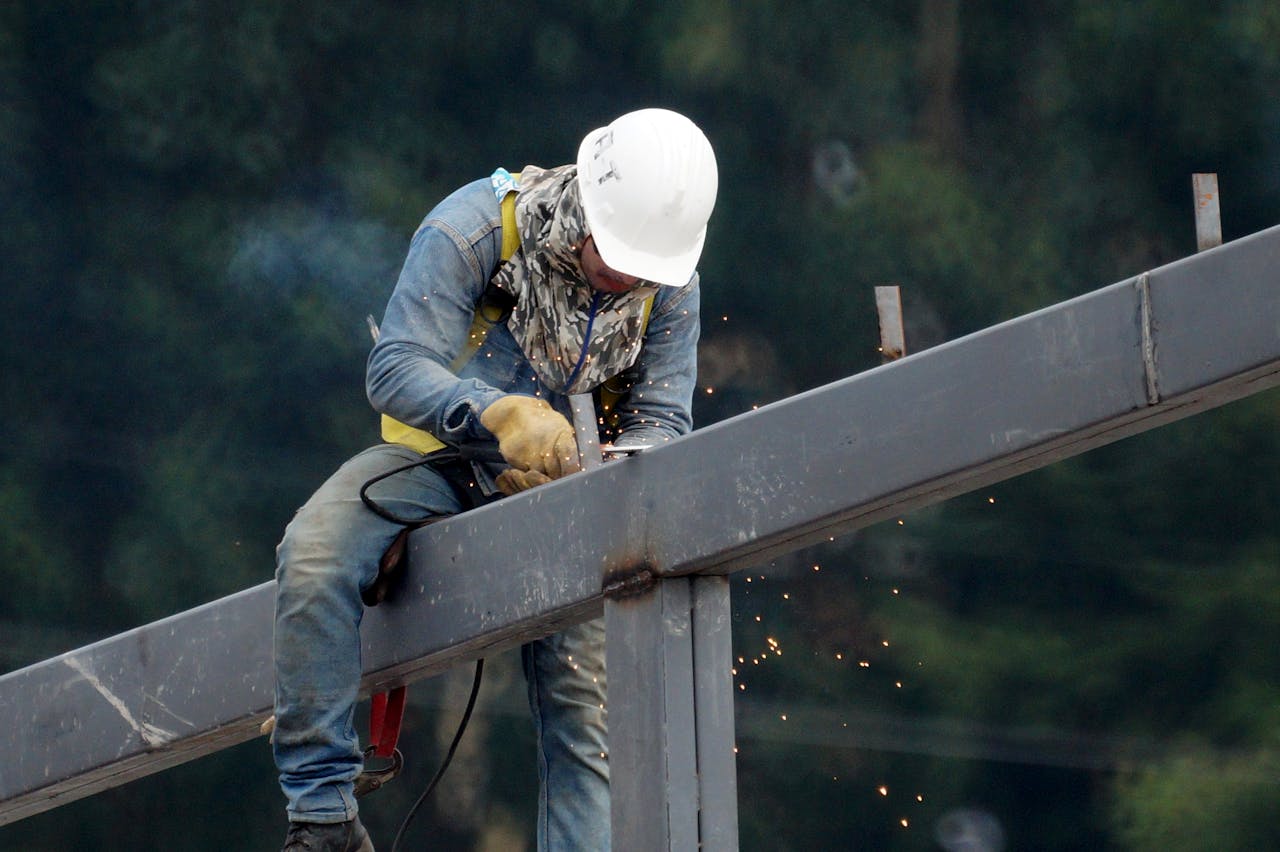
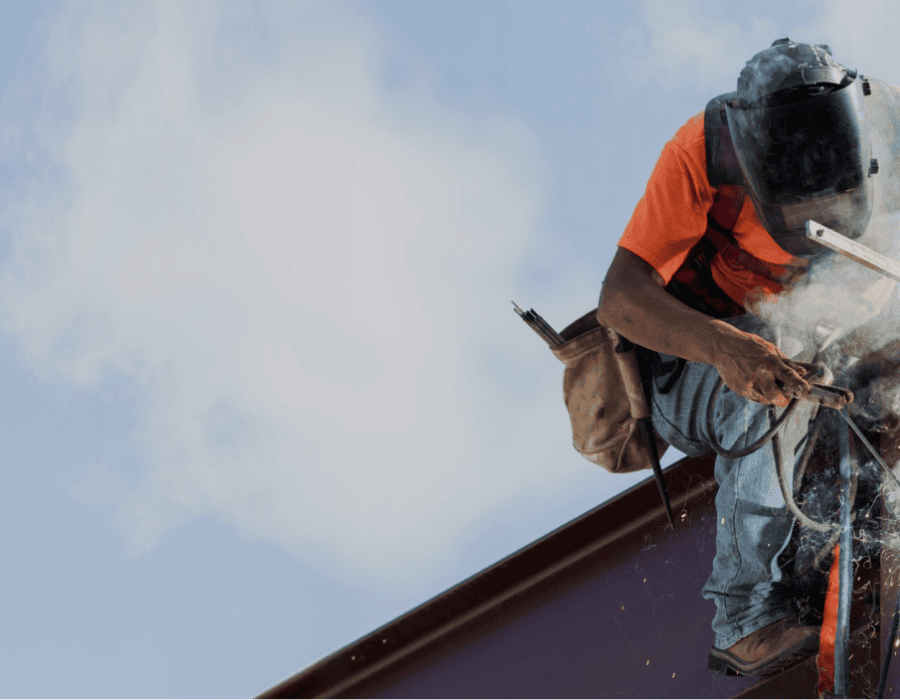
When people talk about structural steel compliance in Australia, they usually start with AS 4100. Cedar Steel welds all structural steel to AS/NZS 1554 with qualified welders and maintained inspection records, supplying structural steel beams, providing steel installation and erection in Sydney, and handling commercial steel fabrication across NSW. But AS 4100 is the design and fabrication standard — it covers how the steel is designed and detailed, not specifically how the welds that hold it together are made. That is the job of AS/NZS 1554, the Australian and New Zealand Standard for structural steel welding. These two standards work as a pair, and a fabrication process that complies with AS 4100 but ignores AS/NZS 1554 is not compliant.
For builders, engineers and project managers commissioning structural steel in NSW, understanding what AS/NZS 1554 requires helps you ask the right questions of your fabricator and verify that what you are getting is what the standard demands.
What Is AS/NZS 1554?
AS/NZS 1554 is a family of Australian and New Zealand Standards that cover the welding of steel structures. The most relevant part for structural steel fabrication is AS/NZS 1554.1, which covers welding of steel structures specifically. Other parts cover welding of stainless steels (1554.6), reinforcing steel (1554.3) and other specific applications.
AS/NZS 1554.1 sets out requirements for: welding procedures, welder qualifications, weld categories (SP and GP), weld inspection and testing, pre-heat requirements, heat input limits, post-weld treatment, and documentation. These are not guidelines — they are minimum requirements that must be satisfied for a fabricated steel structure to comply with the standard.
What Are Weld Categories SP and GP?
AS/NZS 1554.1 defines two weld categories: SP (structural purpose) and GP (general purpose). The category required for a particular weld is specified by the structural engineer on the design drawings and in the specifications.
Category SP is the higher standard. It applies to welds that are structurally critical — connections that carry significant load or that, if they failed, would have serious structural consequences. SP welds are subject to more stringent procedure qualification requirements, tighter heat input controls and more extensive inspection than GP welds. Visual inspection alone is not sufficient for many SP welds; non-destructive testing (NDT) such as ultrasonic testing or magnetic particle inspection may be required.
Category GP applies to welds with less critical structural roles — minor connections, non-structural attachments and secondary elements where a weld failure would not directly compromise the structural integrity of the primary frame. GP welds still require qualified welding procedures and qualified welders, but the inspection requirements are less stringent than SP.
What Are Welding Procedure Qualifications?
A welding procedure qualification is the process by which a specific combination of welding parameters — the welding process, the electrode or wire type, the base material grade, the joint geometry, the heat input, the pre-heat temperature — is tested and documented to demonstrate that welds made using those parameters will meet the required mechanical properties.
Under AS/NZS 1554.1, fabricators must hold welding procedure qualification records (WPQRs) for the welding procedures they use on certified structural work. These records show that the procedure has been tested and that the test welds met the mechanical testing requirements of the standard. A fabricator who cannot produce WPQRs for the procedures used on your project does not have documented compliance.
What Are Welder Qualifications?
Separately from the procedure qualifications, individual welders must be qualified to demonstrate that they can execute a welding procedure to the required standard. Welder qualification tests are conducted in accordance with AS/NZS 2980, which defines the test requirements for manual arc welding of steel in structural applications.
Welder qualifications are position-specific and process-specific — a qualification for flat position welding does not automatically extend to overhead or vertical welding. For complex structural connections that require welding in multiple positions, welders need the appropriate qualifications for each position they will weld in on the job.
Cedar Steel’s welders hold current qualifications under AS/NZS 2980 across the range of positions required for structural steel fabrication. Qualification records are maintained and available for inspection on projects where this is required by the principal or the specification.
What Pre-Heat Requirements Does AS/NZS 1554.1 Set Out?
Pre-heat is the warming of the base steel before welding begins. It serves to slow the cooling rate of the weld and the heat-affected zone around it, reducing the risk of hydrogen cracking — one of the most common and serious weld defects in structural steel.
AS/NZS 1554.1 sets minimum pre-heat temperatures based on the carbon equivalent of the steel, the plate thickness, the heat input of the welding process and the hydrogen content of the consumables. For standard Grade 350 structural steel in typical Sydney applications, pre-heat is often not required on thinner plates, but becomes mandatory as thickness increases. The correct approach is to follow the pre-heat requirements determined by the welding procedure and confirmed by the qualified procedure record — not to assume pre-heat is unnecessary.
How Is Weld Inspection Conducted Under AS/NZS 1554?
Weld inspection under AS/NZS 1554.1 is conducted in three phases: before welding (checking joint preparation, pre-heat and fit-up), during welding (monitoring heat input, pass sequences and inter-pass temperature), and after welding (visual inspection plus NDT where required by the weld category and the specification).
The extent of inspection depends on the weld category, the criticality of the connection and any project-specific requirements set by the engineer or the principal. Cedar Steel maintains inspection records on certified structural projects and can coordinate third-party NDT inspection when required by the specification.
Work With a Compliant Structural Steel Welder in Sydney
Cedar Steel welds all structural steel to AS/NZS 1554, with qualified procedures, qualified welders and maintained inspection records. The fabrication workshop at Bankstown operates under quality management processes that track weld category, procedure and inspection status across every project.
Contact Cedar Steel today:
Visit: https://cedarsteel.com.au/contact/
Call: 1300 714 334
Sydney-wide structural steel fabrication and welding, to standard, on programme. Quote responses within one business day.